


Ultrasonic Processes

Ultrasonic processes in medical engineering
The use of ultrasound is established as state of the art in many areas of medical technology. Examples include aerosol generators in medical inhalers, dental scalers for dental prophylaxis, phacoemulsification for treating lens opacities in the eye and surgical processes such as the processing of bone and soft tissue. Ultrasonic welding of medical products such as respiratory masks is also part of medical technology.
How we can support you:
- Redesign or optimization of existing ultrasound systems for medical applications
- Metrological characterization for the qualification and approval of medical ultrasound systems (e.g. measurement of vibration amplitudes, temperature development, power output, …)
- Conducting application tests and long-term measurements
- Error analysis and product optimisation
Ultrasonic Welding of Metals
Ultrasonic welding of metals is currently experiencing a remarkable renaissance due to the automotive industry’s transformation from combustion engines to electromobility. The high energy previously transported through fuel lines and pipes will now have to flow through electrical conductors, and these conductors must be conductively connected at their ends. The fundamentals of connection formation in ultrasonic welding of metals have been well understood since the 1960s, as fine wires are routinely contacted using ultrasonic wire bonding in industrial semiconductor manufacturing. However, in electric vehicles, electrical connections for very high current densities and conductor cross-sections must now be created. This requires ultrasonic converters and sonotrodes capable of reliably providing high-power sound in the range of several hundred watts to over 10 kW. Since the vibration, unlike in plastic welding, is in the direction of the contact plane („in-plane“), different actuator concepts are required. Nevertheless, extremely high contact forces are necessary in both cases.
Our services:
- Model-based design of high-performance ultrasonic systems for metal welding
- Contacting of copper or aluminum terminals using torsion welding (see image on the right)
- Development of innovative converters and sonotrodes for high-power torsional and linear welding
- Experiments to determine optimal process windows for specific welding tasks (optimization of contact force, power, amplitude, etc.)
- Selection of suitable control concepts and parameters for current, voltage, and frequency in the ultrasonic range

Ultrasonic-assisted manufacturing (welding, cutting, drilling,…)
The use of ultrasound technology has long been established in many areas of industrial production. Besides classic applications such as ultrasonic welding of plastics, high-power ultrasound is increasingly being established for ultrasonic machining. For example, ultrasonic knives are used for the automated cutting of CFRP materials and in food production (packaging, baked goods, biscuits). In industrial drilling or milling of metals, and especially in the machining of brittle materials, process forces can be reduced and higher surface qualities maybe achieved using ultrasound-assisted processes.
How we can support you:
- Model-based design of new, innovative high-performance ultrasound systems
- Construction and metrological characterization of functional models and prototype systems
- Analysis and optimisation of existing ultrasound systems (e.g. shifting spurius resonances, developing alternative design concepts, increasing performance, reducing costs, …)
- Signal analysis of electrical controls (DFT analysis), e.g. for optimizing control algorithms
- Investigation of load effects on the ultrasound system (experimental and model-based)


Ultrasonic processes in liquids
The most prominent application of ultrasound in liquids is ultrasonic cleaning, which is used in industry or by opticians, for example. Chemical processes can also be accelerated and improved using ultrasound. These processes are referred to as sonochemistry. The main mechanism of action is cavitation generated by ultrasound, which locally leads to extreme pressure and temperature gradients and micro-flows (micro-jets).
How we can support you:
- Application tests to investigate the effect of ultrasound in liquids (e.g. prevention of biofilm formation on pipe walls, cell disruption methods for medical and industrial processes)
- Testing options using numerous ultrasound systems available at ATHENA
- Modelling of sound radiation in liquids
- Experimental investigation of cavitation-based processes („cavitation measurements“, ultrasonic acoustics)
Atomizing and dispersing with ultrasound
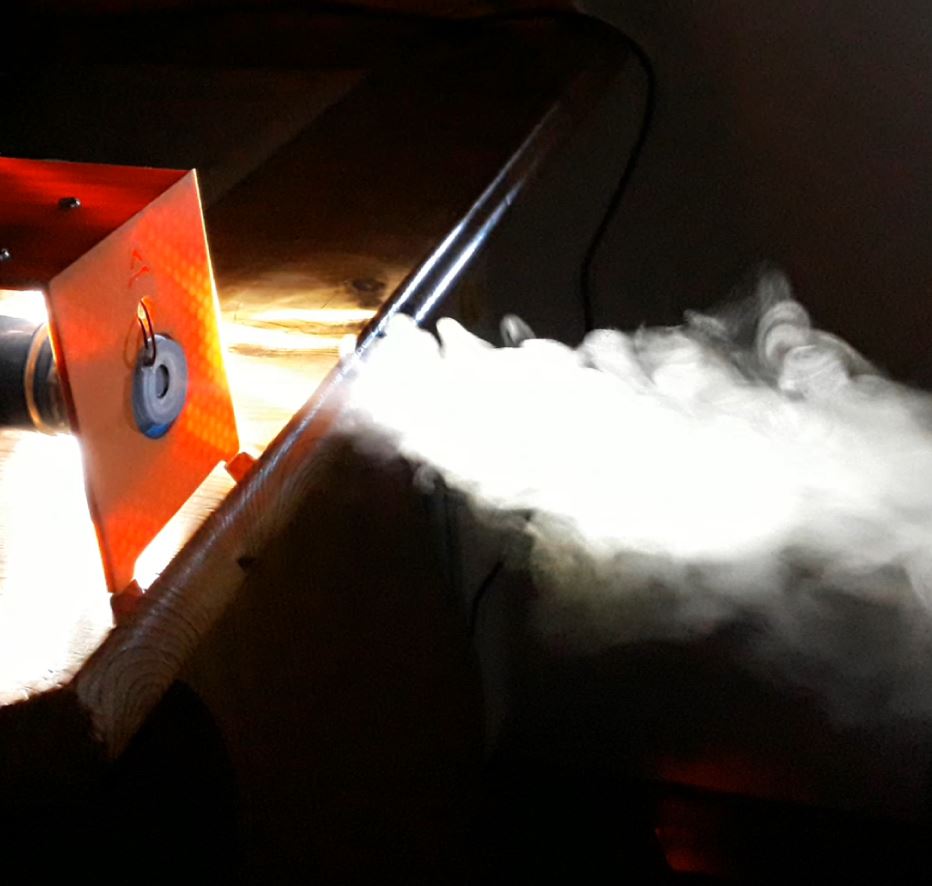
The atomization of liquids using ultrasound is used, for example, in medical inhalers or in industry. Ultrasound-based capillary wave atomization enables the generation of defined droplet sizes. Another area of application is the atomization of melts, e.g. to produce spherical particles for 3D printing. Ultrasonic technology also offers advantages when handling powders, for example in process engineering or the pharmaceutical industry. With the help of ultrasound, a wide variety of powders can be deagglomerated, conveyed, fluidized and dispersed. Thanks to successful funding projects in this area, ATHENA has extensive knowledge of handling powders and liquids using ultrasound.
How we can support you:
- Application tests for atomization and dispersion with existing ultrasonic systems
- Design of customer-specific ultrasonic atomizers (e.g. with internal bore for liquid supply)
- Construction and testing of functional models and prototype systems
- Development of electrical controls


Testing of new, innovative ultrasound processes
Ultrasound technology can be effective in many processes in different ways, as the examples above show. Ultrasound can therefore be used beneficially in various applications. Examples include reducing friction or cleaning and keeping surfaces clean. We would be happy to help you investigate the beneficial use of ultrasound in your application.
How we can support you:
- Short-term application tests in various processes through our inventory of different ultrasound systems (different frequency ranges and power classes) and associated electrical controls.
- Design, construction and commissioning of functional models and prototype systems
Ultrasonics and additive manufacturing (3D printing)
In the field of additive manufacturing technologies, ultrasound technology is currently gaining increasing importance, especially in the field of 3D printing of metals:
- Powder conveying and ultrasonic sieving techniques for the raw materials
- Avoid sticking of workpiece and base plate
- Combination procedures with laser technologies („laser ultrasound“)
- Ultrasonic Additive Manufacturing (UAM)
Here we briefly provide insights into these highly interesting application areas of ultrasound technology
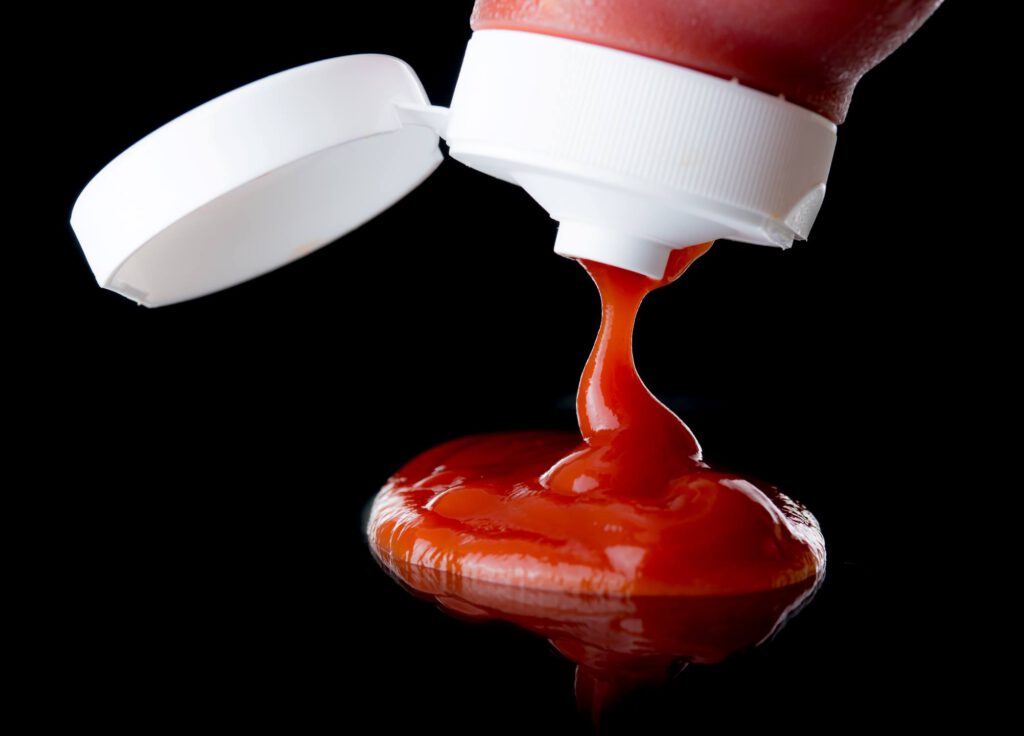
Ultrasound and thixotropy: The ketchup effect
Thixotropic gels and pastes such as ketchup have an unusual flow behavior: the faster they flow, the more fluid they become. Tomato ketchup therefore only comes out of the glass bottle in a controlled manner if it has been shaken well beforehand. Many technical substances also exhibit this behavior. But how can you shake in a defined way in an automated process? The use of ultrasound technology offers very smart and sometimes astonishing possibilities for the precise dosing of thixotropic substances.
Your contacts:
